
Choosing the right car insurance is more than just a legal requirement—it’s a smart way to protect yourself, your car, and your finances. But with so many options, most drivers end up comparing third-party and comprehensive car insurance. The differences between these two types can mean big changes in coverage, cost, and peace of mind. Whether you’re a new car owner or thinking about switching your policy, it’s important to know which insurance suits your needs best. Let’s break down both options, look at real examples, and help you make a confident choice.
What Is Third-party Car Insurance?
Third-party car insurance is the most basic type of coverage you can have in most countries. It’s called “third-party” because it covers damages or injuries you cause to someone else (the third party), not yourself or your own vehicle.
This insurance is usually required by law for all drivers. It protects you from having to pay out of pocket if you damage another person’s car, property, or injure someone in an accident.
Key features:
- Covers damage to other people’s cars and property
- Pays for injuries to other people (not you)
- Does NOT cover your own car’s damage or theft
Example: If you accidentally hit someone’s fence, your third-party policy will pay for the repairs to the fence—but not to your own car.
When Do People Choose Third-party Insurance?
Most people pick this option if:
- They drive an old or low-value car
- They want the lowest legal cost
- Their budget is tight
However, there are some important things many drivers miss: third-party insurance won’t help if your car is stolen or damaged in a fire or flood. Also, if you’re in a hit-and-run or the accident is your fault, you must pay for your own car’s repairs.
What Is Comprehensive Car Insurance?
Comprehensive car insurance is a much wider type of protection. It covers not only third-party damage but also your own car. This means if your car is damaged, stolen, or affected by a natural disaster, you can claim the cost—even if the accident was your fault.
Key features:
- Covers third-party property and injury (same as above)
- Also covers damage to your own car (accidents, fire, theft, vandalism, weather)
- May include extra benefits (towing, personal accident cover, windscreen repair)
Example: If a tree falls on your car during a storm, comprehensive insurance will pay for repairs or replacement. If your car is stolen, you’re also covered.
Who Needs Comprehensive Insurance?
This is the go-to choice for:
- New or high-value cars
- People who park on the street or live in high-risk areas
- Anyone who wants full peace of mind
Many drivers don’t realize that comprehensive policies often include small extras, like coverage for personal items lost in the car or free emergency towing. These can save you time and stress during an emergency.
Side-by-side Comparison
To help you see the differences clearly, here’s a simple comparison:
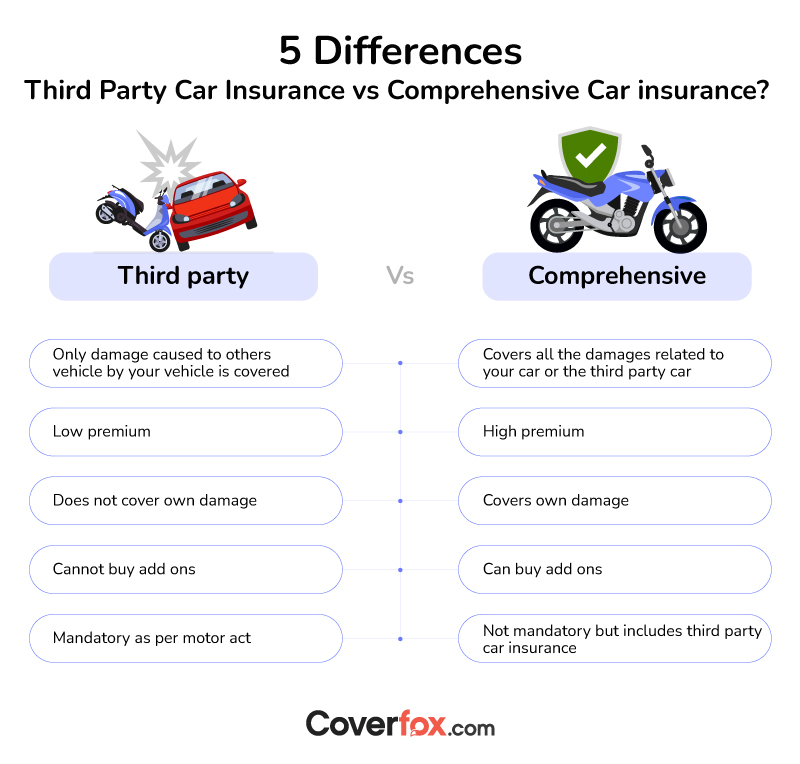
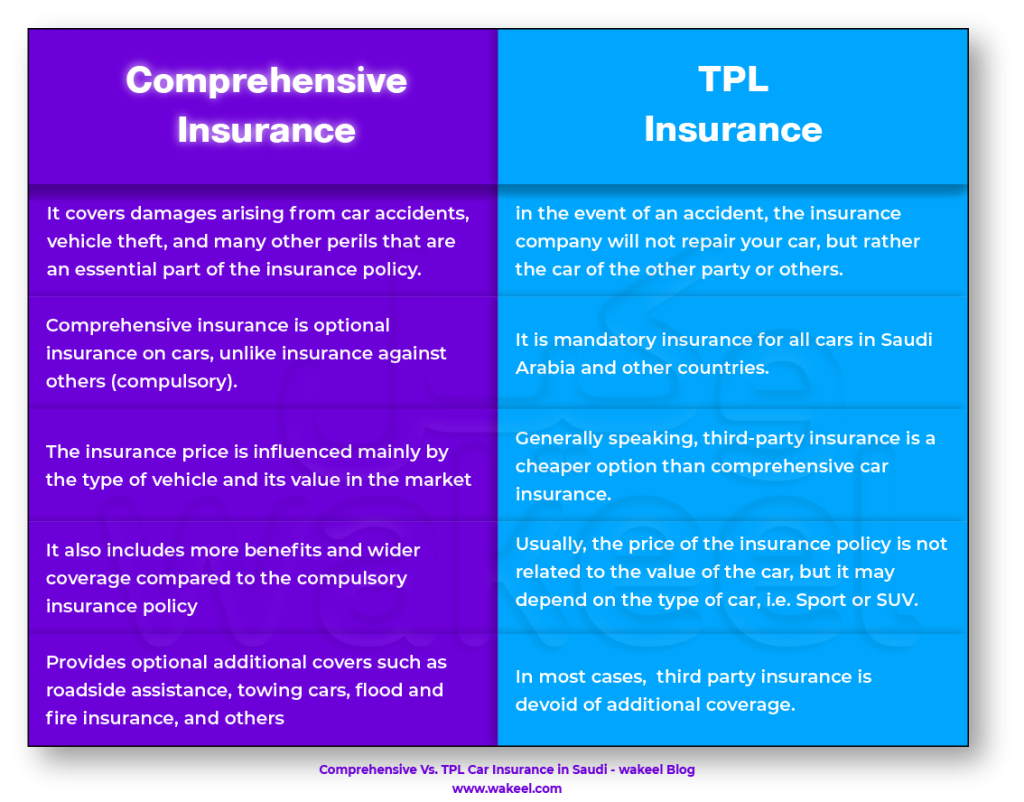
| Feature | Third-Party Insurance | Comprehensive Insurance |
|---|---|---|
| Damage to other vehicles | ✔️ | ✔️ |
| Injury to other people | ✔️ | ✔️ |
| Damage to your own car (accident) | ❌ | ✔️ |
| Theft of your car | ❌ | ✔️ |
| Fire, flood, weather events | ❌ | ✔️ |
| Extras (roadside, towing) | Limited/None | Usually included |
| Cost | Lower | Higher |
Cost Differences: Which Is Cheaper?
Cost is one of the main reasons people choose third-party insurance. On average, third-party insurance costs much less than comprehensive. But it’s important to look at what you get for your money.
Average yearly premium (example numbers, may vary by location):
| Car Type | Third-Party Premium | Comprehensive Premium |
|---|---|---|
| 10-year-old sedan | $350 | $700 |
| New SUV | $500 | $1,200 |
| Sports car | $800 | $2,000 |
While third-party saves you money upfront, comprehensive can save you thousands if something goes wrong. A single accident, theft, or flood could cost much more than the yearly premium difference.
Non-obvious Insight
Many drivers forget to factor in the cost of not having coverage. If your car is stolen or totaled and you only have third-party, you could lose your entire investment. It’s not just about monthly payments—it’s about what you risk losing.
Credit: www.smcinsurance.com
What Do These Policies Actually Cover?
Third-party Insurance
- Legal costs if you’re sued for damages
- Other people’s medical bills
- Other vehicles and property you damage
Does NOT cover:
- Your own car’s repairs
- Theft or fire damage to your car
- Personal injuries (unless special add-on)
Comprehensive Insurance
- All of the above, plus:
- Your own car’s repairs (even if it’s your fault)
- Theft, fire, natural disasters, vandalism
- Sometimes: Personal items, windscreen/glass, rental car if yours is being repaired
Hidden extras: Some comprehensive policies cover emergency travel, locksmith costs, or even replacement child seats after an accident.
Pros And Cons
To make your decision easier, here’s a quick look at the main advantages and drawbacks.
| Type | Pros | Cons |
|---|---|---|
| Third-Party | – Lower cost – Meets legal requirements – Simple to understand |
– No cover for your car – No theft/fire/natural events – Can cost more in the long run |
| Comprehensive | – Full protection – Covers theft, fire, disasters – Peace of mind |
– Higher premium – May not be worth it for old/low-value cars |
Credit: www.coverfox.com
Which Type Is Right For You?
Third-party Suits You If:
- Your car is old or not worth much
- You can afford to lose your car
- You drive rarely or short distances
- You want to spend as little as possible
Comprehensive Makes Sense If:
- Your car is new, valuable, or financed
- You park on the street or in unsafe areas
- You live in a place with floods, storms, or theft risk
- You want extra benefits (like towing, rental car)
Experience-based tip: Even if your car is old, if you can’t afford to replace it, consider comprehensive. Sometimes, the difference in premium is small, but the risk of total loss is big.
Common Mistakes When Choosing
- Focusing only on price: Many buyers pick the cheapest option, not realizing the huge costs if something happens.
- Ignoring policy details: Not all comprehensive policies are equal. Check for exclusions—some exclude floods or theft in certain areas.
- Skipping add-ons: Sometimes, for a small extra fee, you can add roadside assistance or personal accident cover.
- Not updating insurance: As your car gets older, you might want to switch from comprehensive to third-party, or vice versa. Review your policy every year.
- Assuming third-party covers everything: It only covers others—not you or your car.
Credit: www.wakeel.com
How Claims Work
Third-party Claim Example
You accidentally rear-end another car. Your insurance pays for their repairs and injuries. You must pay your own repair costs.
Comprehensive Claim Example
You hit a tree. Your insurance pays for both the tree and your car. If your car is stolen, you get a payout based on your car’s value.
Insider insight: Some comprehensive policies offer “no claim bonus”—a discount if you don’t make claims over time. This can help lower your premium every year.
The Role Of Deductibles And Limits
Both types of insurance have a deductible—the amount you pay before the insurance covers the rest. Comprehensive policies often let you choose a higher deductible for a lower premium. But be careful: if you pick a very high deductible, you might not get much help when you need it.
Policies also have limits—the maximum they’ll pay for certain events. Always check these, especially for theft or natural disasters.
Legal Requirements And Peace Of Mind
In most countries, third-party is the minimum legal requirement. Driving without any insurance can lead to fines, license loss, or even jail. Comprehensive is never required by law, but often required if you’re paying off a car loan.
Peace of mind is hard to measure, but many drivers find comprehensive insurance helps them relax, knowing they’re covered in almost every situation.
Real-life Scenarios
- Anna drives a ten-year-old car: She chooses third-party insurance because her car isn’t worth much. She saves money on premiums, but if her car is stolen, she’ll have to pay for a replacement herself.
- Ben just bought a new SUV: He chooses comprehensive insurance. When his car is damaged in a hailstorm, his insurance covers the repairs, saving him thousands.
- Carla lives in a safe, rural area: She has a reliable, old car and chooses third-party insurance. She feels comfortable with the risk because theft and accidents are rare in her town.
Expert Advice: How To Decide
- Check your car’s market value. If it’s high, comprehensive is usually worth it.
- Think about your location and how you use your car. City drivers or those in high-theft areas need more protection.
- Look at your finances. Could you afford a total loss?
- Compare policies, not just prices. Look for exclusions, extras, and claim service ratings.
- Review your insurance every year, especially if your situation changes.
If you want to dig deeper into car insurance rules and best practices, the Insurance Information Institute has reliable guides.
Frequently Asked Questions
What Is The Main Difference Between Third-party And Comprehensive Car Insurance?
Third-party insurance only covers damage or injury you cause to others. Comprehensive insurance covers that plus your own car, including theft, fire, and natural disasters.
Is Comprehensive Car Insurance Always More Expensive?
Usually yes, but the price difference depends on your car, location, and driving history. Sometimes, comprehensive can be close in price if you have a good record or an older car.
Can I Upgrade From Third-party To Comprehensive Insurance Later?
Yes, most insurers let you upgrade at renewal or sometimes during your policy period. Make sure to check for waiting periods or new inspections.
Does Comprehensive Insurance Cover Floods And Earthquakes?
Most comprehensive policies cover natural disasters, but always read the fine print. Some exclude certain events in high-risk areas.
Is Third-party Insurance Enough If My Car Is Old?
If your car’s value is low and you can afford to replace it, third-party may be enough. But if you rely on your car and can’t afford a big loss, consider comprehensive even for older cars.
Choosing between third-party and comprehensive car insurance is not just about cost—it’s about what risks you’re willing to take. Think about your car’s value, your finances, and your peace of mind. Make your choice with confidence, knowing you’re protecting what matters most.
Read More:
- Term Vs Whole Life Insurance: Which Is Better for You?
- Do You Really Need Life Insurance? Key Facts You Must Know
- What Affects Your Car Insurance Premium? Key Factors Explained
- How to Lower Your Car Insurance Cost: Proven Tips That Work
- How Much Life Insurance Should You Have? Essential Guide 2024
- How to Pick the Best Health Insurance Plan: Expert Tips
- What Does Health Insurance Actually Cover? Essential Facts Explained
- How Health Insurance Works in Simple Terms: Easy Guide